This article reveals how tools like 'ShipNotes' use efficient AI models to translate complex software updates into clear, understandable release notes for average users, bringing technology closer to us.
Have you ever tried to read a software update's change log and felt like you were deciphering an alien language? You're not alone; this is a common frustration for many! Developers often write release notes in their own technical jargon, which is helpful for fellow programmers but can be a complete mystery to everyday users. For instance, you might see a line like: «7c3b9d0 chore(deps): bump vite from 5.2.1 to 5.2.8» or «fix(sync): offline edits were sometimes overwritten». These messages don't convey much to someone who just wants to know what's new or what's been fixed.
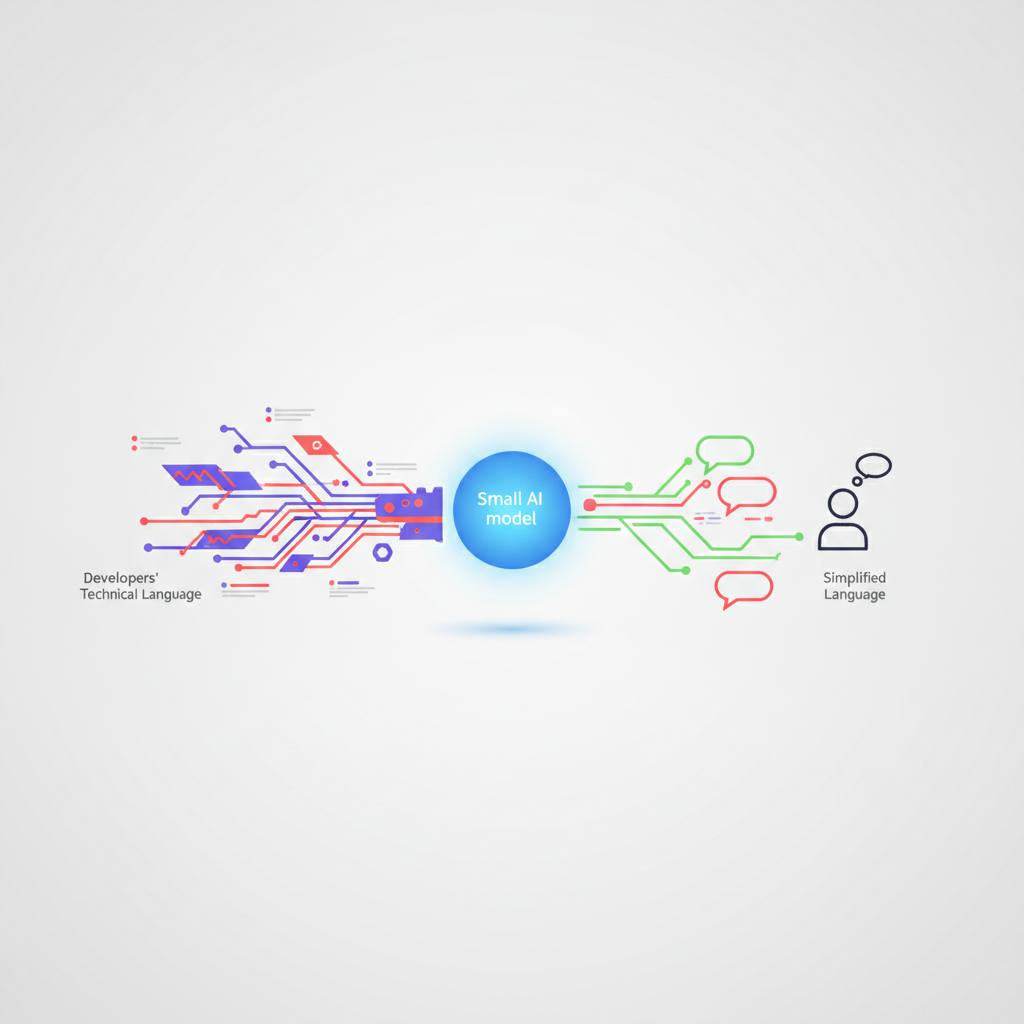
This is where Artificial Intelligence (AI) steps in with a clever solution, like the «ShipNotes» tool mentioned in the news. This tool isn't magic; it relies on a concept called 'Language Models', though in a smaller, more efficient version. These language models are AI programs trained on vast amounts of text. Imagine them having read millions of books, articles, and conversations, making them highly skilled at understanding language patterns and word meanings. When given complex technical text, they can 'comprehend' it and then rephrase it in simpler, clearer language. They act as a real-time 'translator' between developer-speak and everyday user language.
What's particularly exciting about «ShipNotes» is that it uses a small AI model called «Gemma 3 1B». This model is designed to be incredibly efficient, so much so that it can run on 'one core of a regular Central Processing Unit' (CPU). This means it doesn't require giant, expensive supercomputers. This efficiency makes AI accessible even for individual developers or small companies, without high costs or the need to connect to complex cloud services. Instead of dry technical notes, it can generate an organized changelog, explaining new features, improvements, and fixes, and even a brief 'What's new' paragraph for tweets or emails.
In conclusion, this tool demonstrates how AI, even in its miniature forms, can solve real-world problems in our daily lives. It's not just about complex robots or self-driving cars; it can be a highly practical tool for simplifying information and making technology more user-friendly and understandable for everyone. It's a significant step towards bridging the gap between the world of developers and the world of users.
This is where Artificial Intelligence (AI) steps in with a clever solution, like the «ShipNotes» tool mentioned in the news. This tool isn't magic; it relies on a concept called 'Language Models', though in a smaller, more efficient version. These language models are AI programs trained on vast amounts of text. Imagine them having read millions of books, articles, and conversations, making them highly skilled at understanding language patterns and word meanings. When given complex technical text, they can 'comprehend' it and then rephrase it in simpler, clearer language. They act as a real-time 'translator' between developer-speak and everyday user language.
What's particularly exciting about «ShipNotes» is that it uses a small AI model called «Gemma 3 1B». This model is designed to be incredibly efficient, so much so that it can run on 'one core of a regular Central Processing Unit' (CPU). This means it doesn't require giant, expensive supercomputers. This efficiency makes AI accessible even for individual developers or small companies, without high costs or the need to connect to complex cloud services. Instead of dry technical notes, it can generate an organized changelog, explaining new features, improvements, and fixes, and even a brief 'What's new' paragraph for tweets or emails.
In conclusion, this tool demonstrates how AI, even in its miniature forms, can solve real-world problems in our daily lives. It's not just about complex robots or self-driving cars; it can be a highly practical tool for simplifying information and making technology more user-friendly and understandable for everyone. It's a significant step towards bridging the gap between the world of developers and the world of users.